
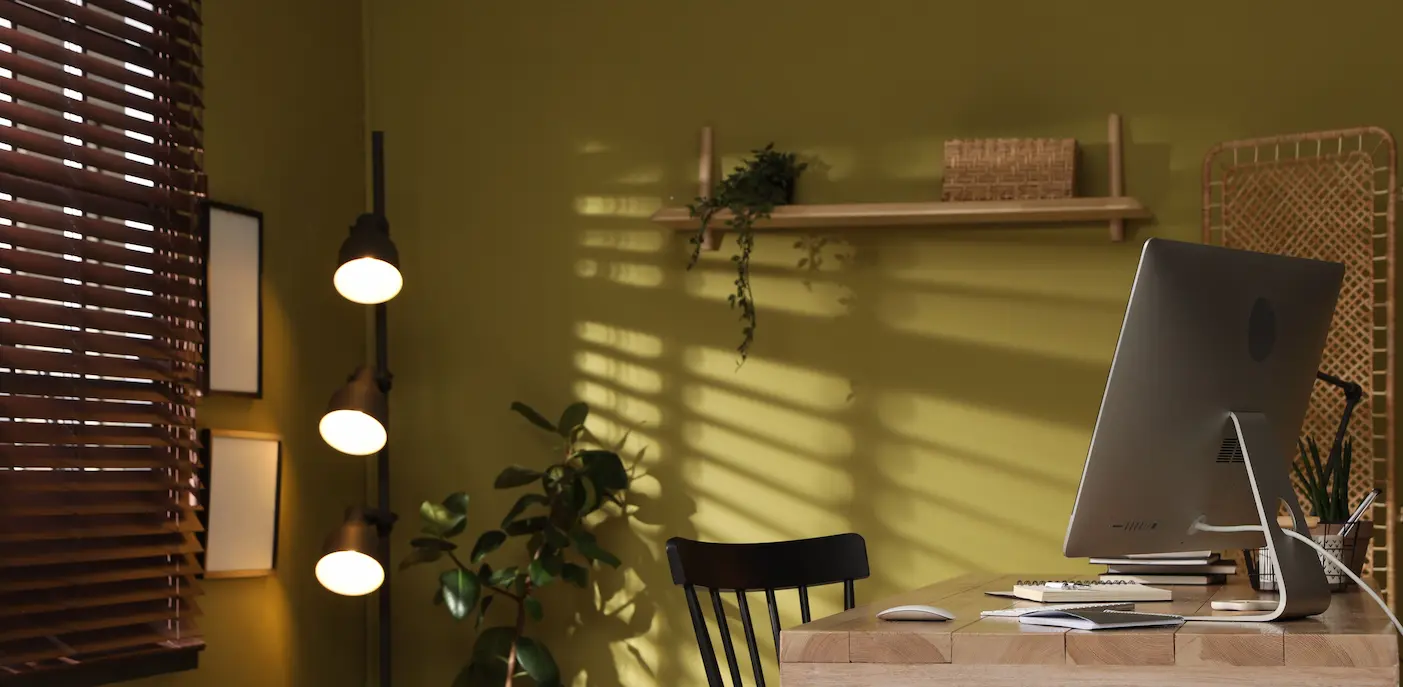
Not every home office needs to be permanent. A home workspace that folds away, moves between rooms, or only exists during work hours solves the problem for anyone without a spare room to dedicate full time. The setups below work in a living room, a kitchen, or even a closet.
Define the Workspace With Objects, Not Walls
A home office workspace does not need four walls to feel separate from the rest of the room. A rug placed under just the desk and chair, a lamp used only during work hours, or a chair reserved for work all send the same signal to your brain: this spot means work right now. Remove any one of those objects at the end of the day, and the space reverts to whatever it was before.
Folding and Wall Mounted Desks
A wall mounted folding desk is the most literal version of a temporary workspace. It sits flat against the wall when not in use and unfolds into a full desk surface during work hours, which matters most among home workspace ideas for small spaces where a permanent desk would block a doorway or eat into a living room.
Rolling Carts as a Portable Office
A rolling cart with a laptop, a notebook, and a small organizer can move between rooms depending on the time of day. Set it up near a window in the morning for natural light, then move it to a quieter corner in the afternoon. This approach borrows a trick from architect home office workspace design, where flexibility often matters more than a fixed floor plan.
Closets as Hidden Offices
A closet with the doors removed, or simply left open during work hours, holds a surprising amount of workspace. A shelf at desk height, a small chair that tucks fully inside, and a plug strip mounted on the closet wall turn unused storage into a home workspace that disappears completely once the doors close at the end of the day.
Making It Feel Consistent
The hardest part of a temporary home workspace is not the furniture. It is training yourself to treat the space as work the moment you set it up, and as done the moment you put it away. A consistent setup routine, even a short one, does more for focus than any specific piece of furniture on this list.
Putting It Together
Pick one flexible piece, a rolling cart, a folding desk, or a cleared-out closet shelf, and build your setup around it. Add the rug or lamp that signals work mode, then stick to the same setup and teardown routine every day. That consistency is what makes a temporary workspace function like a real one.